This isn’t legal advice. Waiver rules vary between states, provinces and countries. Use this checklist to prepare, then have a local attorney review your waiver before you use it.
Before you start
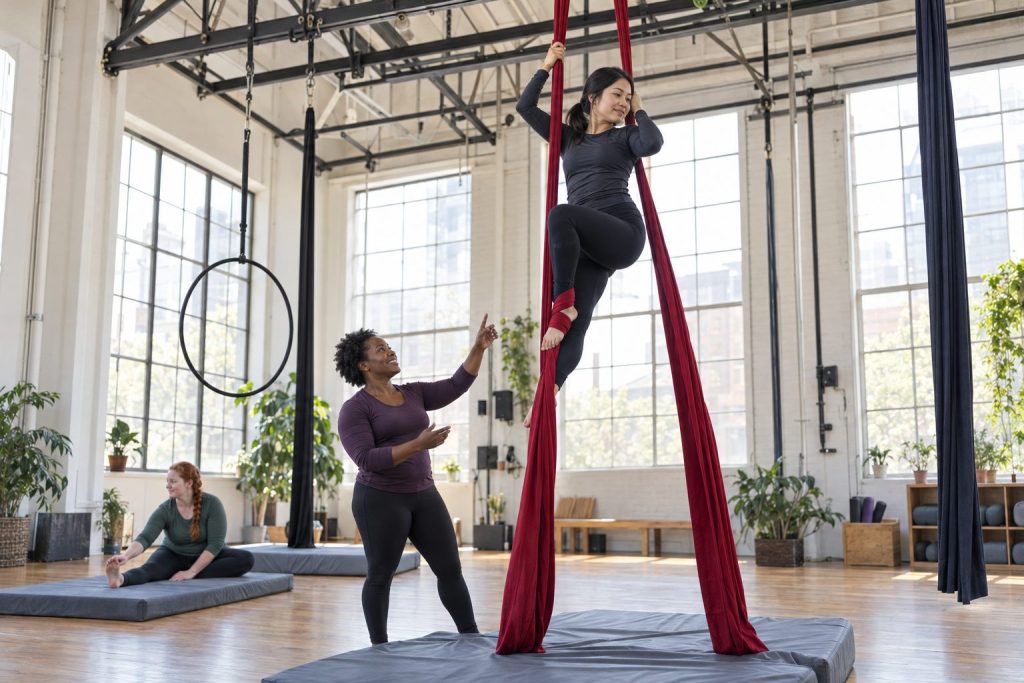
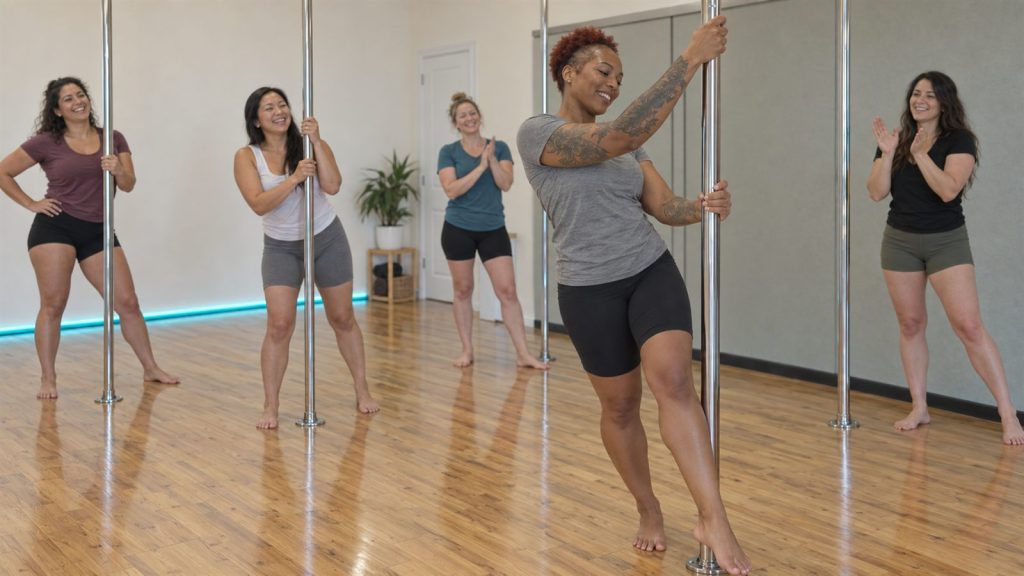
Pole, aerial and circus training involves heights, inversions, spinning and a lot of skin-on-metal contact. A waiver helps students understand those risks and records that they accepted them. It works alongside good teaching, safe rigging, insurance and clear studio rules. It doesn’t replace any of them.
The checklist
Most studio waivers include some version of these sections:
- Who and what. The studio’s legal name and the activities covered, such as pole, aerial apparatus, acrobatics, flexibility, parties and open training.
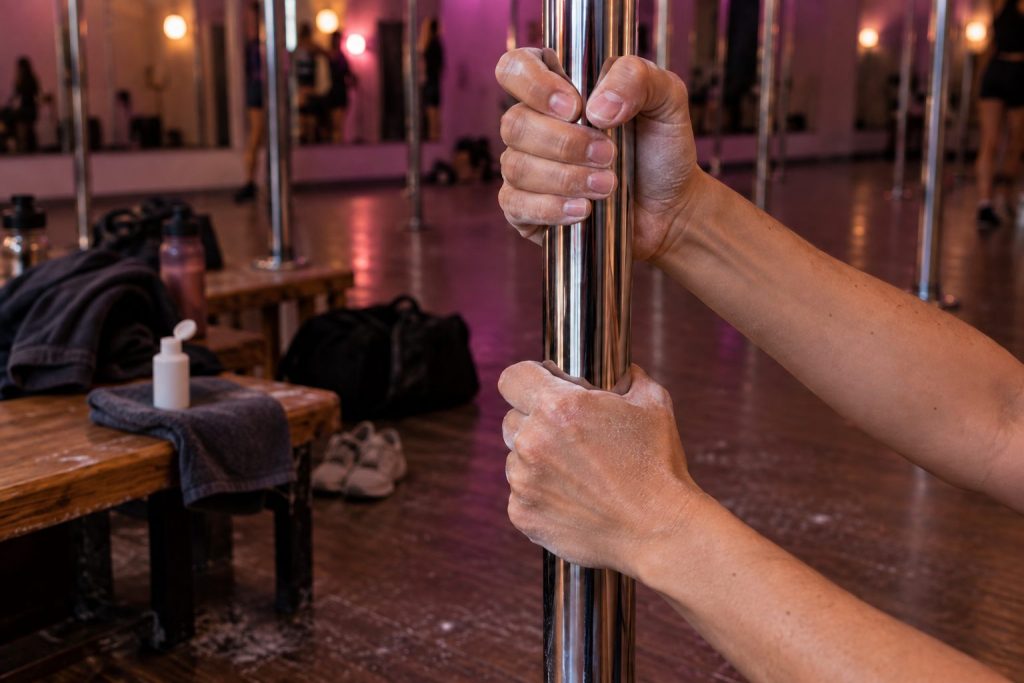
- Description of risks. Plain-language examples: falls, strains, bruising, friction burns, working at height and being upside down.
- Assumption of risk. The participant confirms they understand the risks and choose to take part.
- Release of liability. The core waiver language. Get this section reviewed by a lawyer.
- Health declaration. Confirmation that they’re fit to take part, with space to disclose injuries, conditions or pregnancy.
- Following instructions. An agreement to follow instructor guidance and studio rules, such as not attempting skills above their level.
- Emergency medical treatment. Consent to seek emergency care, and an emergency contact.
- Photo and video consent. Best kept as a separate opt-in, so students can say no without it affecting their booking.
- Personal property. The studio isn’t responsible for lost or damaged belongings.
- Severability. If one clause is found invalid, the rest still stand.
- Signature and date, including consent to sign electronically.
Minors
For youth aerial and circus programs, a parent or legal guardian usually signs on the child’s behalf. Rules on how enforceable waivers are for minors vary a lot by location, which is one more reason to have a local professional review yours.
Collecting signatures without the clipboard
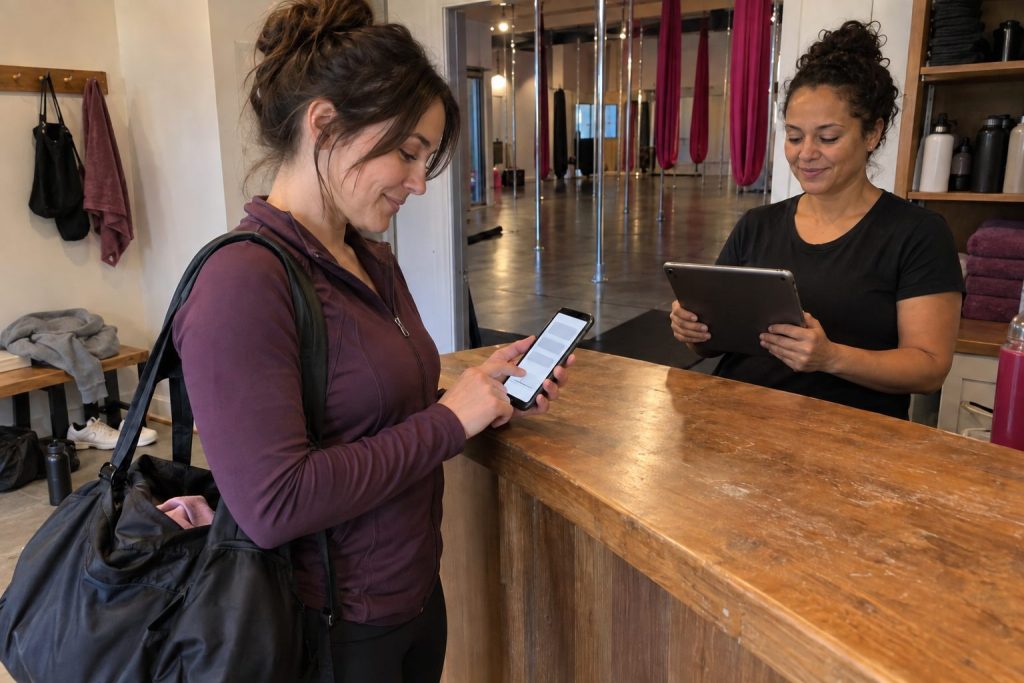
Paper waivers at the front desk slow down check-in, get lost and are hard to find when you need them. Collecting waivers online, as part of booking, is better for everyone:
- New students sign before their first class, not five minutes before it starts.
- Party guests each sign in advance, not just the person who booked.
- Each signed waiver is saved to the student’s profile, so authorized staff can find it in seconds.
In Pole Studio Manager, online signed waivers are part of student registration and stay on the student’s profile.
Keeping it current
- Review your waiver whenever you add a new apparatus or type of class.
- Ask students to sign again when you make significant changes.
- Keep old versions, so you know which wording each student agreed to.