Who it’s for

Built for studios where the floor is optional.

Pole, aerial and circus studios have classes limited by apparatus, levels that exist for safety, and earnings that go well beyond the weekly timetable. Here’s how PSM fits each kind of studio.

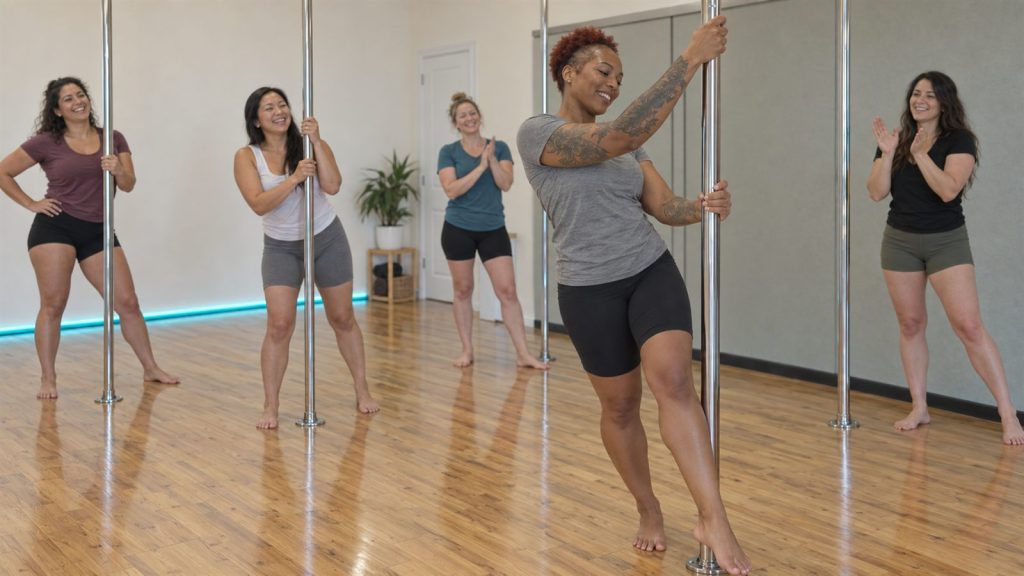
A pole fitness student holds a beginner spin while classmates practise at their poles and cheer her on

Pole studios

From first spin to showcase night.

Pole studios mix structured level programs with drop-in heels and floorwork classes, private parties and instructor trainings. Many students come for one intro class and stay for years. The business depends on keeping levels safe and making booking easy.

Pole fitnessPole danceExotic & heelsFloorworkPole sportSpin & staticChair dancePole conditioningInstructor training
  • Level programs that hold the linePole 1 through Pole 4 (or your own names), with prerequisites that stop students booking inverts too early.
  • Capacity by the poleSet each class to the number of poles in the room. Once it’s full, students can join the waitlist.
  • Bachelorette and birthday partiesBook, schedule and take payment for private parties alongside your regular classes.
  • Intro offers that lead to membershipsNew-student specials, then class packs, then recurring memberships, all tracked on one profile.
  • Grip aids, shoes and apparelSell retail items and track inventory from the same system.
Pole studio software: the full guide
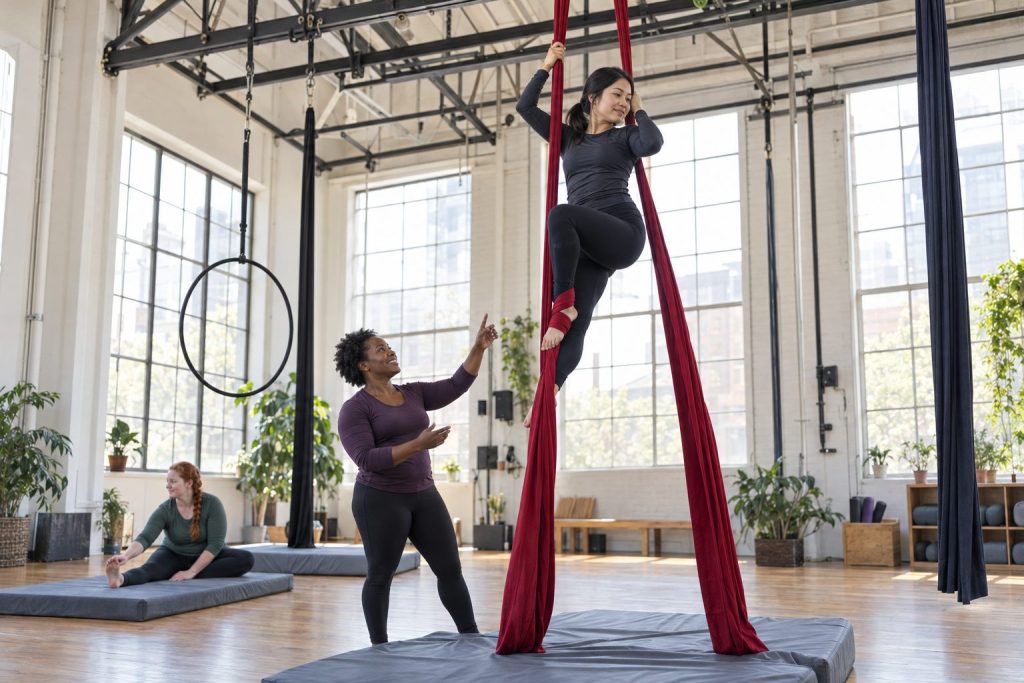
An aerial silks student holds a foot lock while her instructor spots from the crash mat

Aerial arts studios

Rigged for safety, scheduled for flow.

Aerial classes are limited by rigging points, taught by qualified instructors, and built on a careful progression from climbs and locks to drops. Your software should know a silks class of six is full, and that not every student is ready for the drop class.

Aerial silks / tissuLyra / aerial hoopStatic trapezeFlying trapezeStrapsHammock / slingAerial yogaCorde lisseSpanish webCloud swing
  • Capacity per class and roomAn aerial room with six points never takes eight bookings. Extra students join an organized waitlist.
  • Drops by invitationUse prerequisites or invitation-only classes for drops, advanced sequences and duo work.
  • Signed before they leave the groundOnline waivers are saved to each student’s profile. Registration questions can capture injuries your instructors should know about.
  • Open practice and rentalsUse room bookings for open training time, and for performers and companies renting your space.
  • Guest artist workshopsSell limited spots for intensives online, with a waitlist when they fill.
Aerial studio software: the full guide
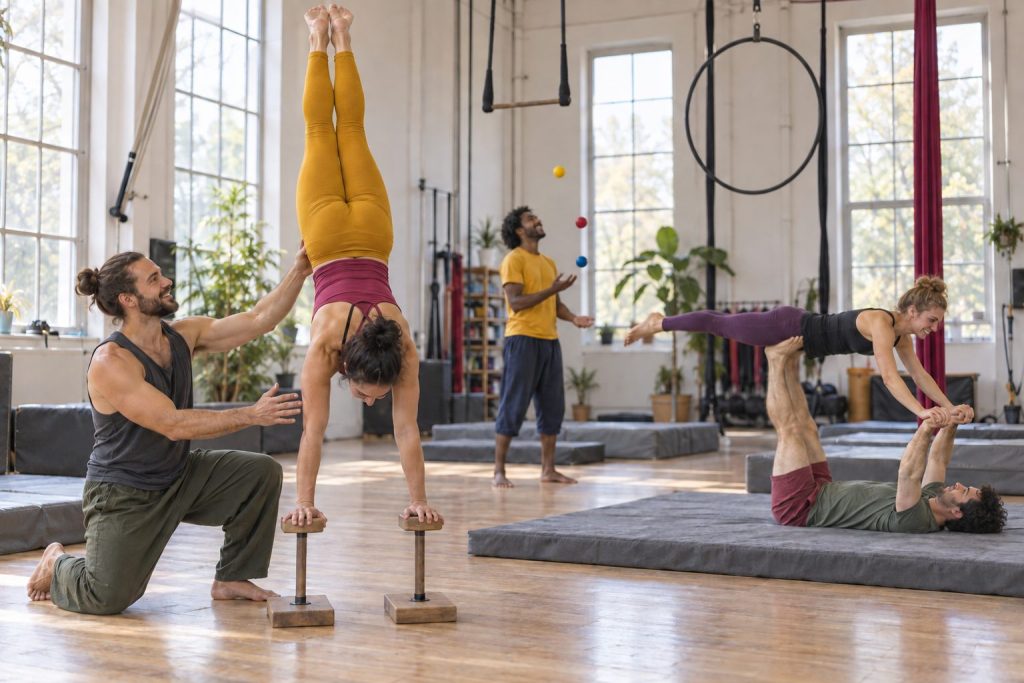
A circus student holds a handstand on wooden canes while her coach spots, with a juggler and partner acrobats training behind

Circus schools

For every age and every act.

Circus schools often run youth terms, adult evening classes, holiday camps, pre-professional tracks and shows all at once, with families paying for several children. A drop-in timetable can’t handle that.

Youth circusRecreational circusPre-professionalAcrobatics & tumblingHandbalancingJuggling & manipulationClowningTightwireUnicycleTrampolineCamps
  • Terms, sessions and coursesEnroll students in a whole term or multi-week course, not just single classes.
  • Payment plans for bigger commitmentsSplit term fees, camps and pre-professional programs into scheduled payments.
  • Auditioned and pre-professional tracksKeep company and troupe classes invitation-only, and use prerequisites for recreational levels.
  • Coaches on every apparatusAssign main and supporting instructors to each class. Coaches see their rosters and take attendance.
  • Family accounts when you need themFor youth programs, one parent account can pay for several children.
Circus school software: the full guide
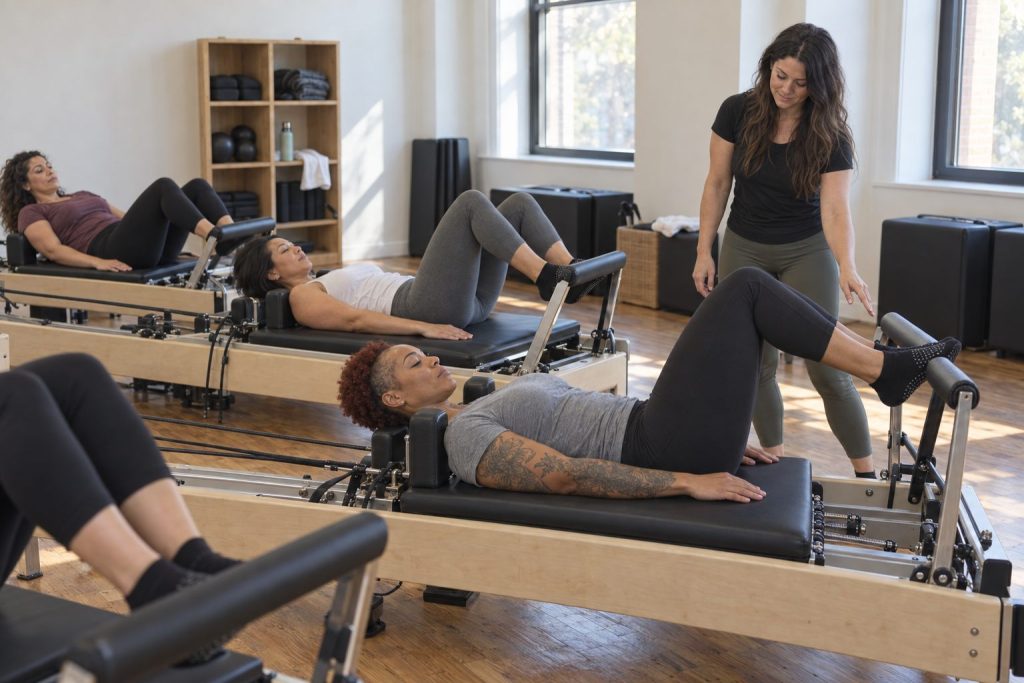
An instructor guides a student through leg work on a Pilates reformer during a small group class

Flexibility, heels & fitness

The classes that fill the gaps.

Flexibility, Pilates, contortion, conditioning, aerial yoga and heels classes often run alongside pole or aerial, and some studios are built entirely around them. They’re usually booked as drop-ins or from class packs, and they’re a big source of new students.

FlexibilityPilates & reformerContortionStretchConditioningHandstandsAerial yogaChair danceHeels choreographyBurlesqueBarre
  • Drop-ins, class cards and packsSell single classes and packs that can expire, and set which classes each one covers.
  • Memberships across programsMembership categories control which classes each tier can book, such as flexibility-only or all-access.
  • Protect limited spotsUse late-cancellation and no-show fees so a popular class isn’t left with empty spaces.
  • Classes beyond the studioOffer on-demand videos or live-streamed classes to members who can’t make it in.
Flexibility & fitness software: the full guide

Multi-discipline studios

Most studios are more than one thing.

Pole on Monday, silks on Tuesday, flexibility at lunch and a kids’ circus camp in July. PSM keeps every program in one schedule, with one profile for each student.

  • Organize the schedule by discipline, level, room and location
  • Separate level ladders for pole, aerial and circus in the same studio
  • Memberships that cover one program or several
  • One student profile across every class, pack, waiver and payment
  • Multiple locations, including a main studio and a high-ceiling venue

Don’t see your studio here?

If it’s taught in levels, we can schedule it.

Parkour, ninja, cheer, trampoline, acro dance and hula hoop studios run on the same building blocks: classes, levels, capacity, memberships and waivers. Start a demo and tell us how your studio works.